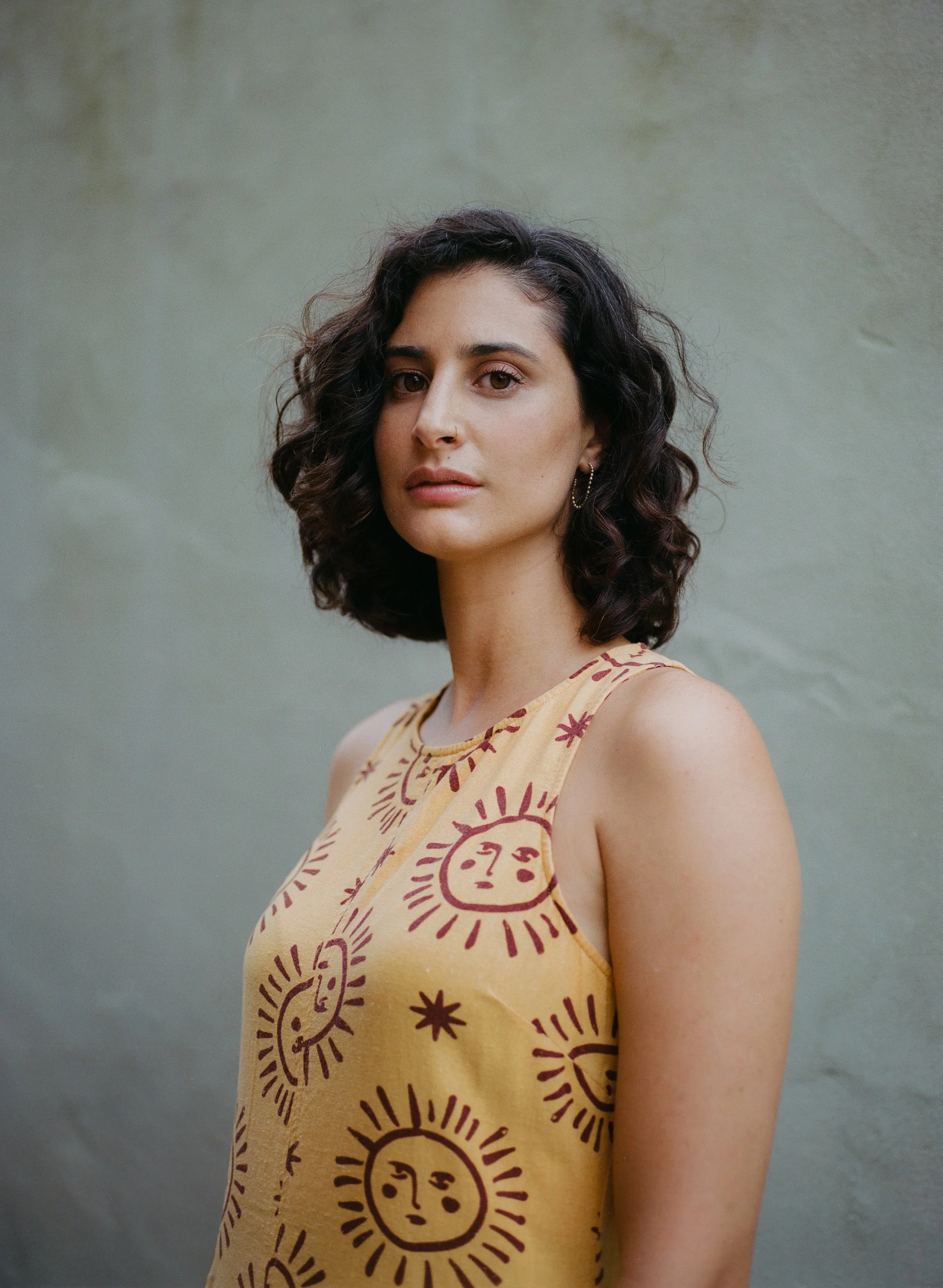
Lamisse Hamouda is a writer, poet, artist, narrative therapist in-training and workshop facilitator. Her memoir, 'The Shape of Dust' was co-authored with her father, and won the 2024 Australian National Biography of the Year Award.
She was a 2025 Keesing Studio writer-in-residence, and a 2024-2026 Adjunct Lecturer for the School of Social Sciences at the University of New South Wales (UNSW). She currently sits on the board with experimental literary arts platform, Runway Journal, as Editor and Engagement & Development Coordinator, and is undertaking her Masters of Narrative Therapy and Community Work at the University of Melbourne.
Based in Magan-djin (Brisbane, Australia), she is of Egyptian, Muslim and white-Australian (European) inheritances. Her work centres on critical engagements with power in narrative and narration, the politics of family history and ancestry, as well as experimental, relational ways of working that prioritise collaboration and/or intergenerational practices.
Artist Statement
I use the written word and performance to re-tether us to each other by meeting the intimacy of our shared survival. I seek to unthread the individualism that isolates and I am inspired by artists and collectives who unweave identities and narratives that once appeared fixed, thereby opening us up to alternative stories and possibilities. Within all my work is an invitation to a re-threading of ourselves to the communal - and an honouring of the ontological imperative to meet our humanity.
My work is informed by a dense tapestry of professional and personal experiences; which shapes my interdisciplinary approach and my engagement with subjugated histories, critical fabulation, archives, memory and narrative therapeutic practices. Further to this, I draw upon my own history of working with ceramics, collage, spoken-word poetry and devised theatre to challenge conventions of writing and teaching writing. Having had a decade-long career in community development before becoming a writer and an artist, I bring in my knowledge and experience of trauma-informed and therapeutic ways of working to my processes, collaborations and writings.. As such, I look for opportunities to break the isolatory and individualized norms of writing by collaborating with visual artists, musicians and theatre-makers.